Mobile App Development Guide 2026 | Types, Process & Benefits
In today’s digital world, mobile applications have become an essential part of everyday life. From ordering food and booking cabs to online shopping and business management, mobile apps are transforming the way people interact with technology. Businesses of all sizes are investing in mobile app development to improve customer engagement, increase sales, and strengthen their brand presence.
Whether you are a startup, small business, or enterprise, having a high-quality mobile application can help you stay ahead in the competitive market. In this blog, we will explore everything about mobile app development, including its importance, types, process, technologies, benefits, trends, and future scope.
What is Mobile App Development?
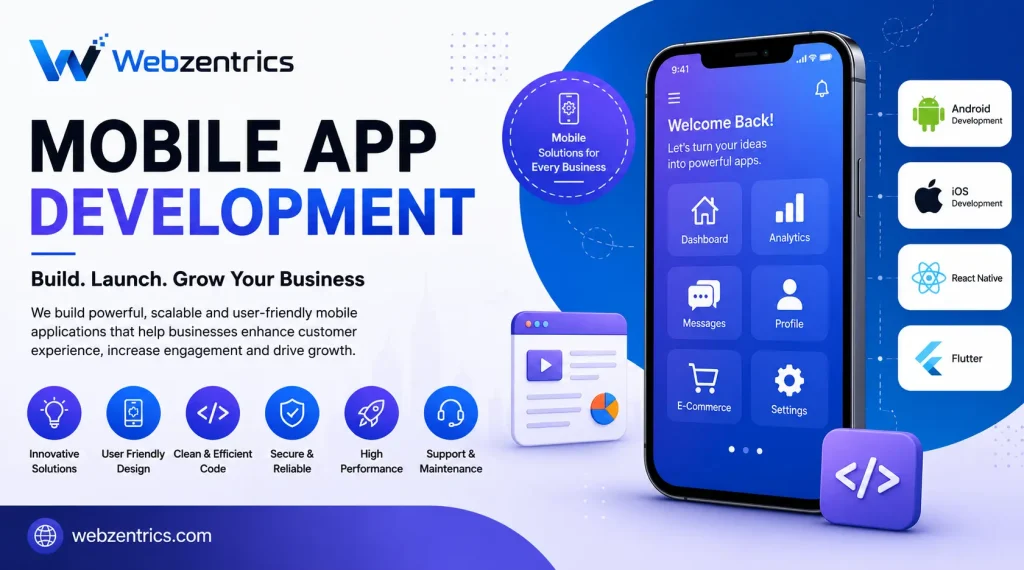
Mobile app development is the process of creating software applications that run on smartphones, tablets, and other mobile devices. These apps are designed for platforms like Android and iOS and are developed using various programming languages and frameworks.
Mobile applications can be:
- Native Apps
- Hybrid Apps
- Cross-Platform Apps
- Web Apps
The primary goal of mobile app development is to provide users with fast, responsive, and user-friendly digital experiences.
Why Mobile App Development is Important
Mobile applications have become a necessity for modern businesses. Consumers spend a significant amount of their time on mobile devices, making apps one of the best ways to connect with customers.
Key Reasons Why Mobile Apps Matter
1. Better Customer Engagement
Mobile apps allow businesses to communicate directly with users through push notifications, in-app messaging, and personalized experiences.
2. Improved Brand Visibility
A well-designed mobile app keeps your brand visible on users’ devices every day.
3. Increased Sales and Revenue
E-commerce and service-based apps help businesses generate more sales through convenient online transactions.
4. Enhanced User Experience
Apps provide smoother navigation, faster performance, and better usability compared to websites.
5. Competitive Advantage
Businesses with modern mobile apps often outperform competitors who rely only on websites.
Types of Mobile Applications
Understanding different types of mobile apps is important before starting development.
1. Native Mobile Apps
Native apps are developed specifically for a single platform like Android or iOS.
Technologies Used
- Android: Java, Kotlin
- iOS: Swift, Objective-C
Advantages
- High performance
- Better security
- Smooth user experience
- Full access to device features
Disadvantages
- Higher development cost
- Separate codebase for each platform
2. Hybrid Mobile Apps
Hybrid apps combine web technologies with native app capabilities.
Technologies Used
- HTML
- CSS
- JavaScript
Advantages
- Faster development
- Lower cost
- Single codebase
Disadvantages
- Lower performance compared to native apps
3. Cross-Platform Apps
Cross-platform development allows developers to build apps for Android and iOS using one codebase.
Popular Frameworks
- React Native
- Flutter
- Xamarin
Advantages
- Cost-effective
- Faster deployment
- Easier maintenance
Disadvantages
- Some platform limitations
4. Progressive Web Apps (PWAs)
PWAs are web applications that work like mobile apps through browsers.
Advantages
- No app store requirement
- Lightweight
- Easy updates
Disadvantages
- Limited device functionality
Mobile App Development Process
Developing a successful mobile application requires proper planning and execution.
Step 1: Idea and Research
Every app starts with an idea. Businesses must identify:
- Target audience
- User problems
- Market demand
- Competitor analysis
Proper research helps create apps that solve real-world problems.
Step 2: Planning and Strategy
In this stage, developers define:
- App features
- Technology stack
- Budget
- Timeline
- Development approach
A strong strategy reduces risks and improves project success.
Step 3: UI/UX Design
User Interface (UI) and User Experience (UX) design play a major role in app success.
Important Design Elements
- Clean layout
- Easy navigation
- Responsive design
- Attractive visuals
- Fast loading speed
A user-friendly design increases engagement and retention.
Step 4: App Development
This is the coding phase where developers build frontend and backend functionalities.
Frontend Development
Handles:
- App interface
- User interactions
- Visual components
Backend Development
Handles:
- Database
- APIs
- Authentication
- Server-side logic
Step 5: Testing
Testing ensures the app works smoothly without bugs.
Types of Testing
- Functional Testing
- Performance Testing
- Security Testing
- Compatibility Testing
- Usability Testing
Quality assurance is essential for delivering a reliable application.
Step 6: Deployment
After testing, the app is published on:
- Google Play Store
- Apple App Store
Store optimization is important for better visibility and downloads.
Step 7: Maintenance and Updates
App development does not end after launch.
Regular updates help:
- Fix bugs
- Improve performance
- Add new features
- Maintain security
Continuous maintenance keeps users satisfied.
Popular Mobile App Development Technologies
Choosing the right technology is important for app performance and scalability.
Android Development Technologies
- Kotlin
- Java
- Android Studio
iOS Development Technologies
- Swift
- Objective-C
- Xcode
Cross-Platform Frameworks
- React Native
- Flutter
- Ionic
Backend Technologies
- Node.js
- Laravel
- Firebase
- Django
Database Technologies
- MySQL
- MongoDB
- PostgreSQL
Benefits of Mobile App Development for Businesses
Mobile applications offer multiple advantages for companies across industries.
1. Strong Customer Relationships
Apps create direct communication channels with users.
2. Increased Accessibility
Customers can access products and services anytime.
3. Improved Business Efficiency
Apps automate many business processes.
4. Better Data Collection
Businesses can analyze user behavior and preferences.
5. Higher Customer Loyalty
Reward programs and personalized experiences increase retention.
Essential Features of a Successful Mobile App
A successful app should provide value and smooth functionality.
Important Features Include:
- User-friendly interface
- Fast performance
- Push notifications
- Secure login system
- Offline functionality
- Payment gateway integration
- Social media integration
- Analytics and tracking
These features improve user satisfaction and engagement.
Mobile App Development Trends in 2026
Technology is evolving rapidly, and businesses must stay updated with the latest trends.
1. Artificial Intelligence (AI)
AI-powered apps provide:
- Personalized recommendations
- Chatbots
- Voice assistants
- Smart automation
2. Internet of Things (IoT)
Mobile apps are increasingly connected with smart devices like:
- Smart homes
- Wearables
- Healthcare devices
3. Augmented Reality (AR) and Virtual Reality (VR)
AR and VR apps are growing in:
- Gaming
- Education
- Real estate
- E-commerce
4. 5G Technology
5G improves:
- App speed
- Streaming quality
- Real-time connectivity
5. Cloud-Based Mobile Apps
Cloud integration provides:
- Better storage
- Faster synchronization
- Improved scalability
Challenges in Mobile App Development
Despite the advantages, app development comes with several challenges.
Common Challenges
- Device compatibility
- Security risks
- Performance optimization
- High competition
- User retention
- Frequent updates
Professional development practices help overcome these issues.
How to Choose the Right Mobile App Development Company
Selecting the right development partner is critical for project success.
Consider These Factors:
- Portfolio and experience
- Technical expertise
- Client reviews
- Communication process
- Support and maintenance
- Pricing and transparency
A reliable company ensures quality development and long-term support.
Future of Mobile App Development
The future of mobile app development looks extremely promising. Emerging technologies like AI, blockchain, machine learning, and cloud computing are shaping the next generation of mobile applications.
Businesses that invest in innovative mobile solutions will continue to grow and improve customer experiences. Mobile apps will become smarter, faster, and more personalized in the coming years.
Conclusion
Mobile app development has become a powerful tool for businesses looking to grow in the digital era. A well-designed application improves customer engagement, increases revenue, and strengthens brand identity.
From startups to large enterprises, mobile applications offer endless opportunities for innovation and business growth. Whether you choose native, hybrid, or cross-platform development, focusing on user experience, performance, and security is essential for success.
As technology continues to evolve, mobile apps will play an even bigger role in shaping the future of businesses and digital experiences.
If you are planning to build a mobile application for your business, partnering with an experienced development team can help you turn your ideas into successful digital products.